

Living room with a grey sofa and a Savaria Luma on the right.

Ultimate guide to home accessibility

If stairs or reduced mobility are making daily life more difficult, adapting your home can help you or a loved one stay safe and independent.

This guide explains the different types of home accessibility solutions available, including stairlifts, through-floor lifts, wheelchair platform lifts and home lifts. You’ll learn how the different options compare, who they are best suited to and important things to consider before deciding.
4 questions to find the right lift for your home

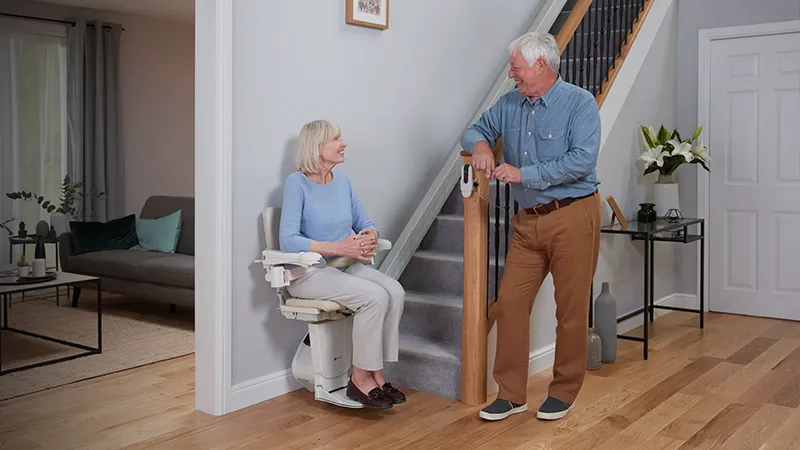
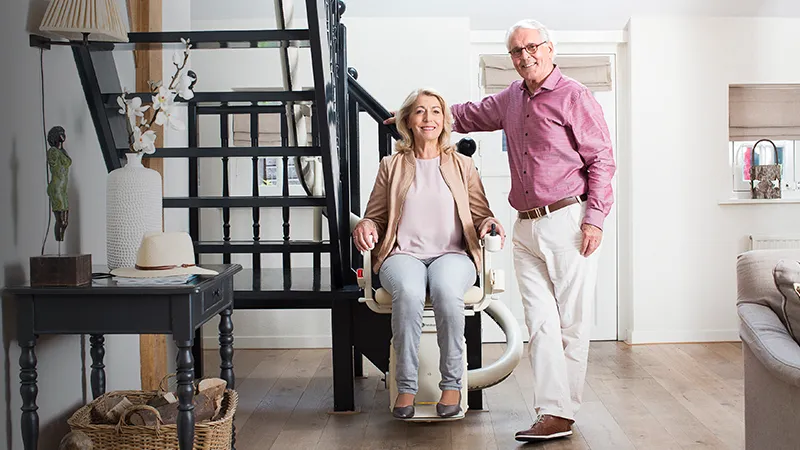
Woman sitting on a Handicare Freecurve stairlift while a man stands beside her in a living room.

Home accessibility solutions can help reduce the risk of falls, improve confidence and make it easier to access your home. Before choosing a solution, it’s important to understand your mobility needs, living environment and the challenges you face.

  • When should you consider a home accessibility product?
  • What are the main types of home accessibility solutions?
  • Which accessibility solution is right for your home?
  • How much do home accessibility lifts cost?
When should you consider a home accessibility product?

You may want to consider a stairlift, wheelchair lift, through-floor lift or other accessibility adaptation if you or a loved one:

  • Struggle to climb the stairs without stopping
  • Feel unsteady or unsafe using the staircase
  • Rely heavily on handrails for support
  • Avoid using parts of the home because stairs are difficult
  • Have experienced a fall or near miss on the stairs
  • Use a walking aid, wheelchair or mobility scooter
  • Are recovering from surgery or illness
  • Want to remain living independently at home
  • Are planning ahead for later life or changing mobility needs

For many households, adapting the home can be a more practical and cost-effective alternative to moving house.

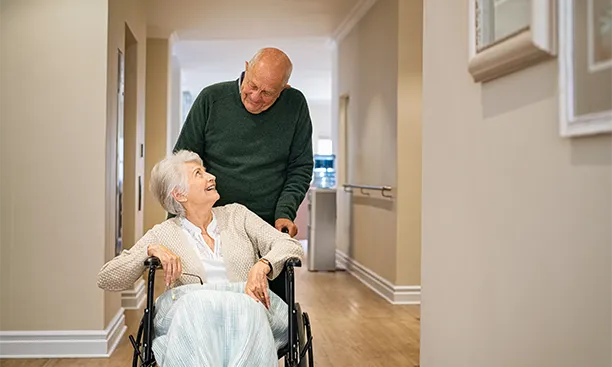
Man walking beside a woman using a wheelchair along a bright residential hallway with framed pictures.

What are the main types of home accessibility solutions?

Home accessibility solutions help you move around your home. They can range from simple adaptations, such as grab rails and ramps, to larger installations like stairlifts, wheelchair lifts, through-floor lifts and and home lifts with shaftways. Below, we explain the main types of home accessibility solutions and which one may be right for you.

Stairlifts

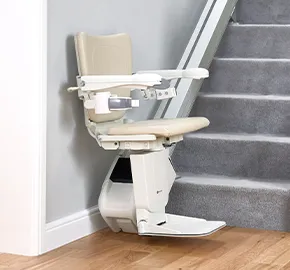
A stairlift, also known as a chairlift, is a motor-driven chair that travels along a rail mounted to a staircase, helping people move from one floor to another without using the stairs. Stairlifts are generally best suited to people who can safely transfer on and off a seat independently and don’t need to travel with a mobility aid.

Wheelchair lifts

Platform lifts (often called wheelchair lifts) are lifts designed to carry a person along with a wheelchair, mobility scooter, or walking aid from one level to another.

Depending on the type, it either travels up or down (a vertical platform lift) or moves along the staircase on a track (an inclined platform lift). Platform lifts can be considered a type of home lift, as they transport users between levels and can be installed in a lift shaft.

Through-floor lifts

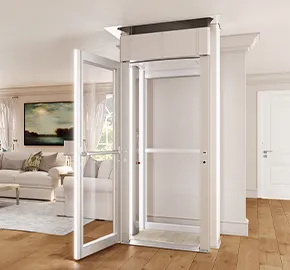
Through-floor lifts travel vertically through a cut-out in the floor between two levels. They are usually self-supporting and require less construction work than home elevators making them an easy option to retrofit into existing homes.

Through-floor lifts are limited to serving two floors and are a popular solution for homeowners who need a practical and space-efficient alternative to the stairs.

Compact models like the Savaria Luma are designed primarily for standing users and those using walking aids.

Home lifts with shaftways

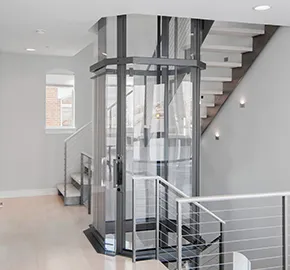
For travel of more than two levels, a home lift should have a shaftway for safety. The Savaria Vuelift panoramic home lifts include an integrated glass or acrylic hoistway. This gives them flexibility of placement in your home. They feature fully automatic operation, rather than push-to-run controls that through-floor lifts use. These luxury lifts can travel up to six levels and are offered in a variety of cabin sizes, including one that will accommodate a wheelchair.


Which accessibility solution is right for your home?

Choosing the right accessibility solution depends on your mobility needs, the layout of your home, the space you have, and your budget.

nav_icons_92x92_stairlifts normal
If stairs are becoming difficult

If using the stairs is becoming difficult, you have several options. A stairlift is often the most practical and cost-effective way to improve travel between floors, with solutions available for different staircase layouts and space requirements. Installation is usually quick, with many stairlifts installed within a day.

If a stairlift is not suitable due to your staircase design, layout or changing mobility needs, a through-floor lift can be integrated into your home, offering comfortable access between floors while fitting naturally within your living space.

nav_icons_92x92_wheelchairlifts normal
If you use a wheelchair

Platform lifts, some through-floor lifts and home lifts are ideal for wheelchair users, as they are designed to accommodate both the user and their mobility equipment.

Nav Icons 92×92 M1504
If outdoor access is difficult

Outdoor accessibility solutions such as outdoor stairlifts and platform lifts can make it easier and safer to navigate steps leading to and from entrances, driveways, patios and gardens. For wheelchair users, a platform lift can provide step-free access, while an outdoor stairlift can be a practical option for people who are able to lift themselves on and off a stairlift seat independently.


How much do home accessibility lifts cost?

Costs for accessibility solutions vary depending on your property, its layout, the complexity of the installation and any optional features you might want to add to your lift. Financial support may also be available through grants, VAT relief and charitable funding, helping to make home accessibility solutions more affordable.


Couple reviewing paperwork at a table, with one person using a calculator.
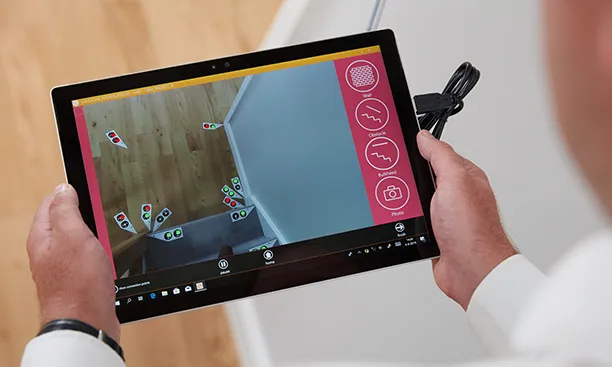
Close view of a tablet running the PS4D stair survey, showing detected stair edges and a pink menu.
What is the starting price of a home accessibility lift in the UK?

Before we can provide a quotation, a surveyor will visit your home and carry out a survey to assess the space, discuss your mobility needs and recommend the most suitable solution. This helps identify any installation requirements at the start of the process.

Savaria uses a patented Photo Survey 4D (PS4D) technology that creates a detailed digital model of your staircase using photographs and measurements. This allows us to design your stairlift with greater precision and, for curved stairlifts or inclined platform lifts, show you a 3D visualisation of how the rail and lift will look in your home before your quote is generated.

As a guide, typical prices start from around £2,500 for stairlifts, £10,000 for wheelchair platform lifts and £16,000 for through-floor lifts, including installation.

Solution Starting cost Wheelchair compatible Typical lead time* Install time
Stairlift £2,750+ No 1 day 3-5 hours
Platform lift £10,000+ Yes 6-8 weeks Several days
Through-floor lift £15,000+ Some models 6-8 weeks Several days
Shaftway home lift £30,000+ Yes 8-12 weeks Several weeks

*Lead times are estimates and may vary depending on product availability, your location, the complexity of the installation and any preparation work required before installation.

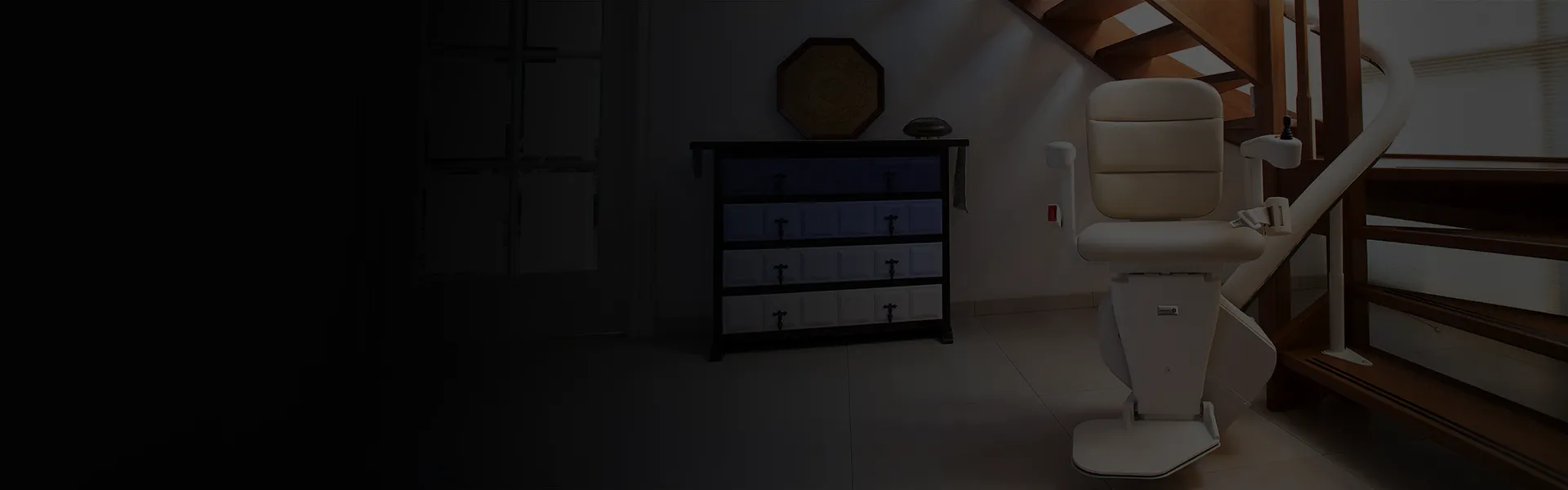
Stairlift parked at the bottom landing beside a wooden staircase.

Book a home visit to get your free, no-obligation quote or click here to find one of our accredited local partners.

Book now
Grants and funding for accessibility solutions in the UK

The cost of a stairlift, home lift or other accessibility adaptation can be a significant investment and while the fastest way to buy a lift is to buy privately, financial support may be available depending on your circumstances. In the UK, grants, VAT relief and charitable funding can help reduce the cost of making your home safer and more accessible. The support available will depend on where you live, your financial situation and the type of adaptation being installed. In most cases, you'll need to complete an application and may be required to undergo a means test, occupational therapist assessment or eligibility checks before funding is approved and the product can be ordered.

Below are some of the most common funding options available to homeowners and tenants.

Couple reviewing documents together at a kitchen table.
Icon Drive 146×146 Charity1
Disabled Facilities Grant (DFG)

Can help cover the cost of essential home adaptations such as stairlifts and other accessibility solutions.

In England, eligible applicants may receive up to £30,000 towards approved adaptations (funding arrangements differ in Scotland, Wales and Northern Ireland).

Funding is usually means-tested based on your household income and savings.

Icon Drive 146×146 Charity2
VAT relief and exemptions

If you are registered disabled or have a chronic health condition, you may also qualify for VAT exemption.

When comparing quotes, check whether VAT is included so you can compare costs accurately.

Icon Drive 146×146 Charity3
Charities and other funding support

Other grants and support may also be available through charities and specialist organisations, including referral-based funding from Independence at Home and Margaret’s Fund, as well as sector-specific charities such as SSAFA and Royal Agricultural Benevolent Institution.


Understanding stairlifts

Woman seated on an indoor stairlift while a man stands beside the staircase in a home hallway.
  • Stairlifts are one of the most common solutions for people who have difficulty using the stairs but can still get on and off a seat independently or with minimal assistance. They are designed to support users who do not require a wheelchair but need a safer and more comfortable way to travel up and down the stairs.
  • For a more detailed look at stairlift options, features, and what to consider before buying, visit our Ultimate Guide to stairlifts.

Types of stairlifts

Straight and curved

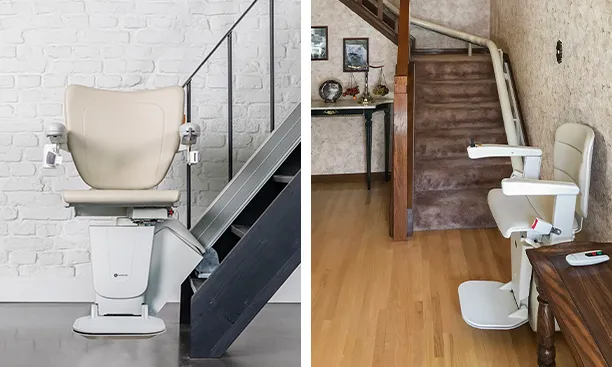
There are two types of stairlifts: straight stairlifts that service a single flight of straight stairs, and curved stairlifts that service turning or curved staircases, and stairs with an intermediate landing or multiple flights. Curved stairlifts are an option if you want to park the stairlift around a corner at the top or bottom of the staircase too.

Split photo of a straight stairlift, and a curved stairlift.
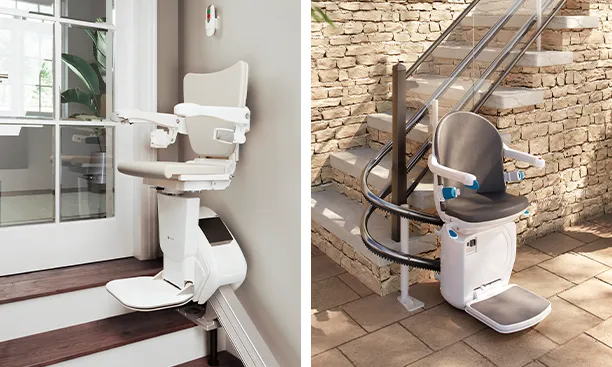
Comparison of an indoor straight stairlift by a glass door and an outdoor curved stairlift on stone steps.
Indoor vs outdoor stairlifts

Some stairlifts models can be installed indoors or outdoors. If you plan to install a stairlift outside, you’ll need to choose a stairlift built to endure weather conditions. Bear in mind that all outdoor stairlifts require extra maintenance for long-term reliability, especially when exposed to salt air or snow. An outdoor stairlift should be covered when not in use. See the Handicare 1000 (straight stairlift) or Handicare 4000 (curved stairlift) for different outdoor options.


How to choose the right stairlift

After identifying whether you need a curved stairlift (for stairs with turns and bends) or a straight stairlift (for a straight flight of stairs without bends), choosing the right model depends on your mobility and comfort requirements.

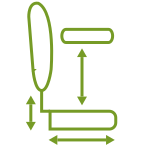
Icon Seatadjustment 146×146 Green
Comfort features

Many models can be customised with different seats and features to make them easier and safer to use. You can choose from different seat styles, sizes, and weight capacities. Some seats include adjustable-width arms to better suit your body shape.

stairlift icon displaying swivel feature
Powered features

Powered features such as swivel seats, folding footrests, and seat elevation can reduce strain when getting on and off the lift. If you have limited knee or hip flexibility, a perch seat may be more comfortable, allowing you to travel in a semi-standing position.

icon__finishes 146×146 Green
Colour features

Many stairlifts can also be customised with a choice of colours, upholstery, and rail finishes to complement your home.


Understanding wheelchair lifts

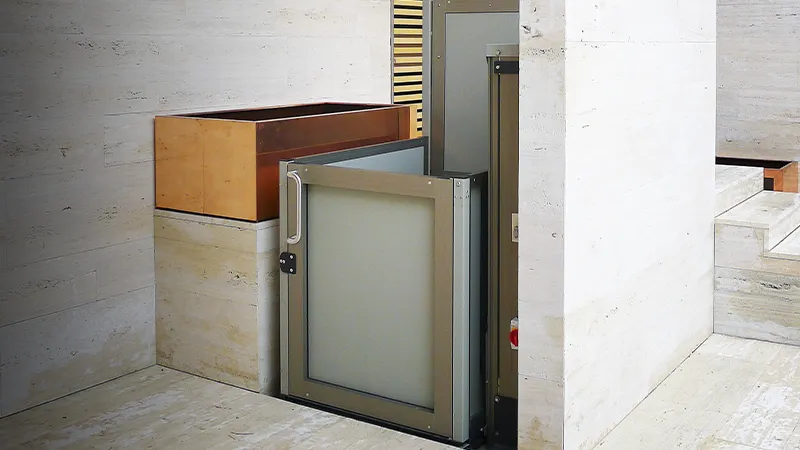
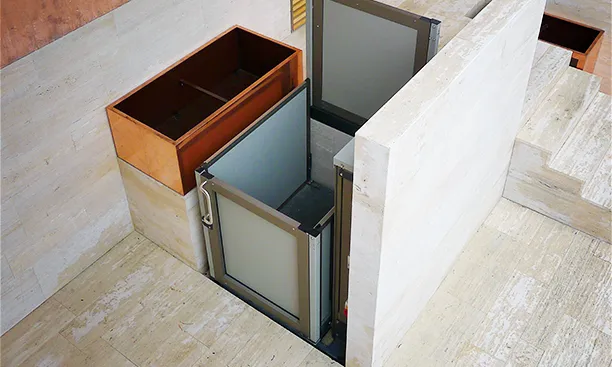
Garaventa Lift Opal vertical platform lift in a limestone hallway.

The sections below explore the different types of platform lifts and the key considerations when choosing one for your home.

  • Platform lifts or wheelchair lifts are designed to carry a person together with their wheelchair, mobility scooter or walking aid from one floor to another. Unlike a stairlift, there is no need to transfer on and off a seat, making wheelchair lifts a practical solution for people who need to remain in their mobility equipment while travelling.
  • Wheelchair lifts operate using constant-pressure controls. This means the button must be pressed and held while the lift is moving. If the button is released, the lift stops immediately.
What are the different types of platform lifts?

Platform lifts are available in two main types: vertical platform lifts (VPLs) and inclined platform lifts (IPLs). Depending on the model, they can accommodate wheelchairs, powerchairs, mobility scooters or other walking aids. Some models include an optional seat so users can travel without their mobility aids if they prefer.

Vertical platform lifts

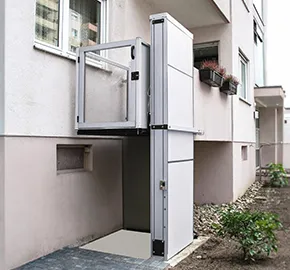
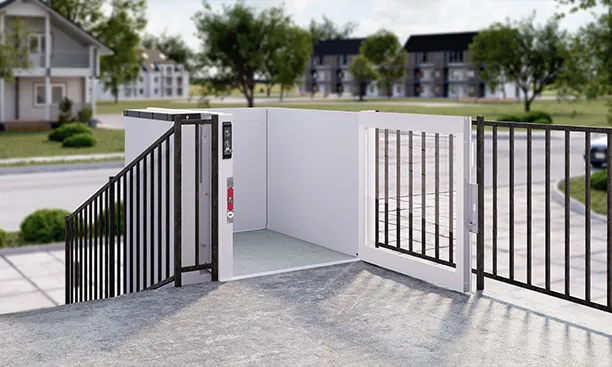
Vertical platform lifts travel straight up and down. They are designed to overcome changes in level and can be installed both indoors and outdoors. They are often used to provide access to a porch, raised entrance, garage or another floor within the home.

A vertical platform lift may require a lift shaft or enclosure in some installations, particularly for greater travel distances or where additional safety and security are needed, although many models do not require a shaft up to 3 metres and typically involve only moderate building work.

Savaria offers two vertical platform lifts: the Garaventa Lift Opal and the Savaria Multilift. Neither require a lift shaft, making installation simple compared to models that do.

Savaria Multilift on the top landing with open gates.
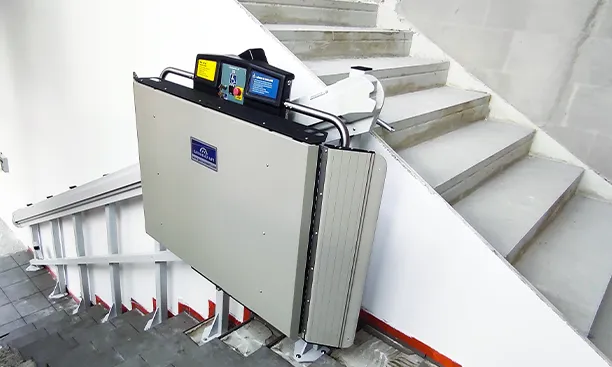
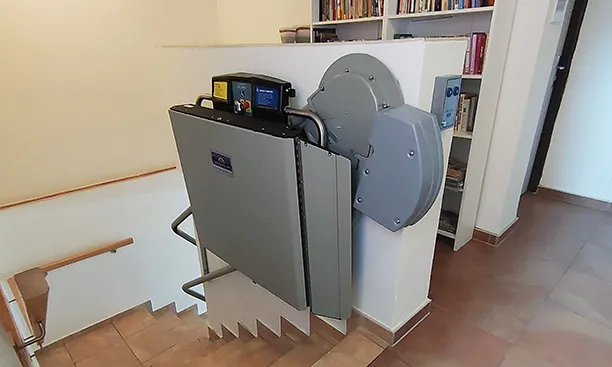
inclined platform lift folded up.
Inclined platform lifts

Inclined platform lifts travel along the staircase on a rail, following the angle of the stairs, like a stairlift. Rather than moving vertically, they use the existing staircase to transport a wheelchair user between floors. There are options available for straight staircases and staircases with turns, bends and landings.

These solutions are often chosen for mobility aid users when there is insufficient space for a lift shaft (which would be needed for a traditional home elevator) or where preserving the layout of the home is important. When not in use, the platform folds away to maximise stair access. However, inclined platform lifts require more space on the staircase than stairlifts.

Savaria offers the Garaventa Lift X3 for straight staircases, and the Garaventa Lift Artira for curved staircases.

Vertical platform lifts vs inclined platform lifts

Feature Vertical platform lift Inclined platform lift
Travel direction Straight up and down Along the staircase
Wheelchair compatibility Yes Yes
Indoor installation Yes Yes
Outdoor installation Yes Yes
Building work required Moderate Minimal
Best suited to Entrances and changes in level Existing staircases

Is a platform lift right for my home?

If your home has steps leading to the front, side or back entrance, an outdoor vertical platform lift may be a suitable option to bridge the gap. They are a popular choice where outdoor access is difficult and there is sufficient space for a lift installation. A vertical platform lift can also be suitable indoors where there are steps between rooms.

Top down view of a vertical platform lift.
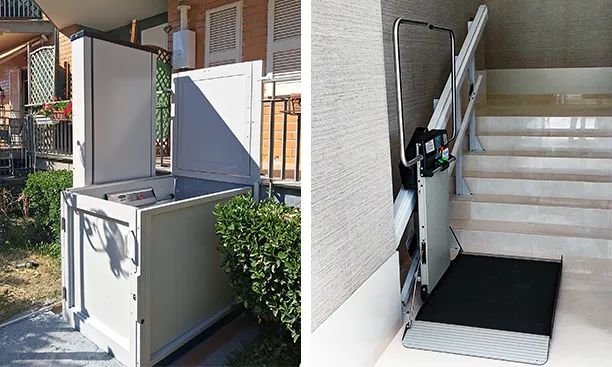
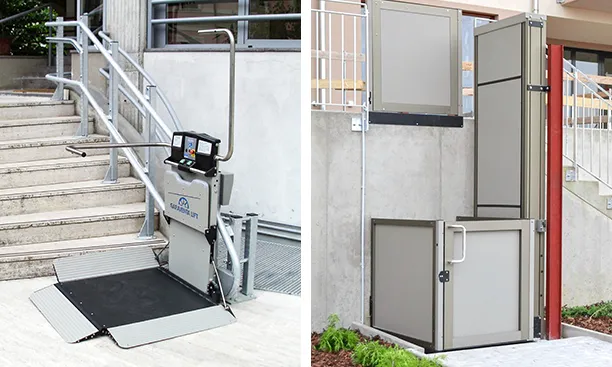
Split photo of an outdoor vertical platform lift, and an indoor inclined platform lift.
Where can a wheelchair lift be installed?

Wheelchair lifts can be installed both indoors (in your home or garage) and outdoors, depending on the type of lift, layout and space available. Book a free home assessment to see if a wheelchair lift is right for your property. Our surveyors will offer expert advice, recommend a solution based on your needs, and generate a quote.

How much space is needed?

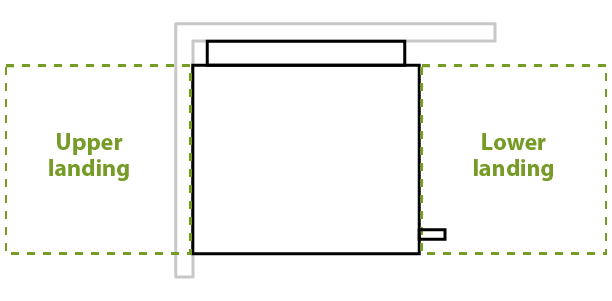
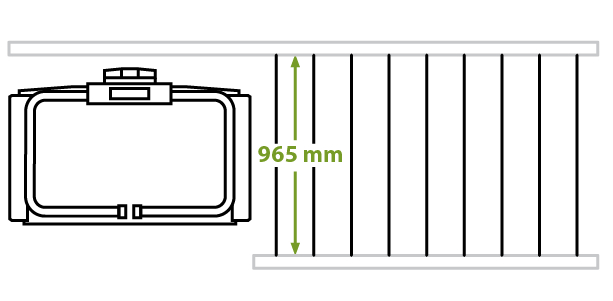
Vertical platform lifts require sufficient space for the lift itself, as well as space at the upper and lower landings. Inclined platform lifts require enough landing space for the platform, and for entry and exit, generally with a minimum staircase width of around 965 mm, although requirements vary depending on the model and staircase configuration.

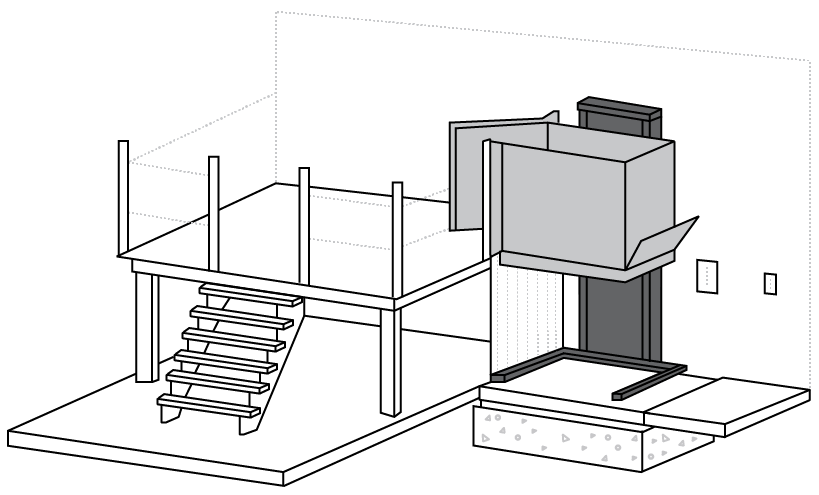
Vertical Platform Lift

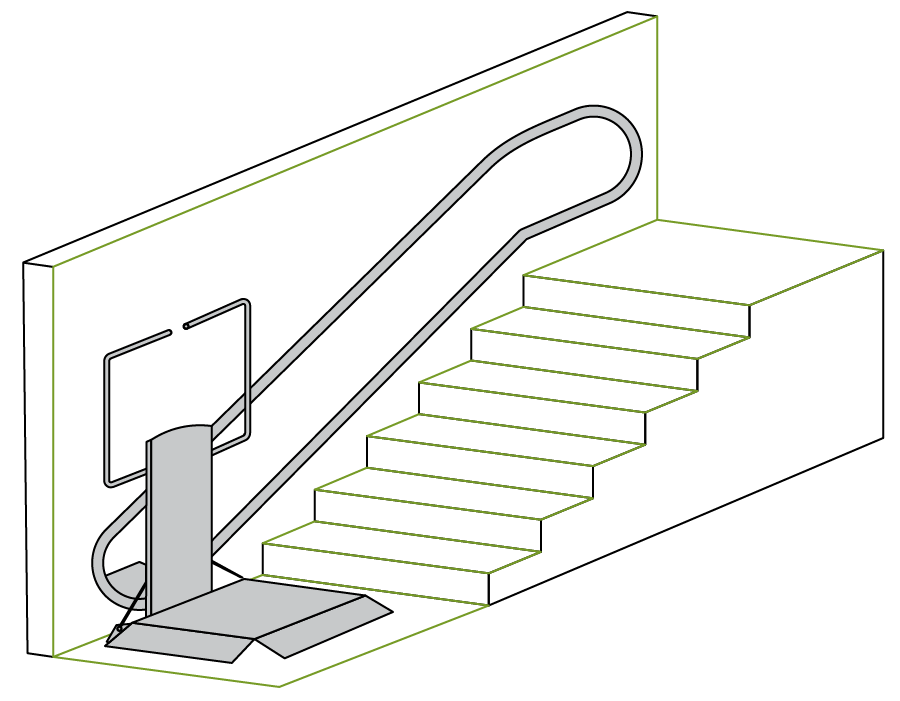
Inclined Platform Lift

Drawing of a Savaria Multilift with a ramp, and stairs.
What work is needed before an outdoor vertical platform lift installation?

Some construction preparation is required before the installation of a wheelchair lift. Vertical platform lifts, like the Savaria Multilift, must be securely anchored at the base, with a fascia panel along the travel wall to eliminate pinch points. You will need an electrical supply and, in some cases, an automatic locking safety gate.

How much work is needed before an inclined platform lift installation?

Installing an inclined platform lift requires less work compared to a vertical wheelchair lift. When installing an inclined lift, it is important to verify that the staircase and/or rail wall provide adequate structural support and you have sufficient space at the top and bottom landing to embark or disembark the lift. The amount of space needed will depend on the size of the platform, the angle of the staircase, and whether access is provided straight through or at a 90-degree angle. A minimum staircase width is also required. Savaria can advise on the space needed for your chosen lift and provide guidance based on your property's layout.

Drawing of an inclined platform lift parked at the bottom of a straight staircase.
Indoor vertical platform lift beside wall-mounted call buttons.
How long does it take to get a platform lift?

Platform lift lead times vary depending on the type of lift, travel height, available space and the complexity of the installation. Factors such as site preparation and product customisation affect the overall timescale from order to installation.

As a general guide, a platform lift typically takes several weeks from order to installation. For example, a Savaria platform lift can take as little as four weeks to design, manufacture and supply, although the overall timescale depends on the model selected, site preparation and the complexity of the installation.


Weight capacity and platform sizes

Wheelchair lifts are available in a range of platform sizes and weight capacities to accommodate different types of wheelchairs, powerchairs and mobility scooters.

The Garaventa Lift X3 and the Garaventa Lift Artira inclined wheelchair lifts are available with a choice of six platform sizes, with custom colours and sizes available.

The Garaventa Lift Opal vertical wheelchair lift can house up to 340 kg, and the Savaria Multilift has a maximum capacity of 385 kg.
Garaventa Lift Artira parked on an indoor staircase with a bookshelf in the background.
Compare our inclined wheelchair lifts

Specification Garaventa Lift X3 Garaventa Lift Artira
Applications Indoor or outdoor Indoor or outdoor
Load capacity 300 kg 250 kg, 300 kg optional
We’d recommend this for Straight staircases in homes Straight and curved staircases with bends, turns or landings

Compare our vertical platform lifts

Specification Garaventa Lift Opal Savaria Multilift
Applications Indoor or outdoor Indoor or outdoor
Load capacity 340 kg 385 kg
Travel distance Up to 3m Up to 1.8m
Configurations Straight-through or 90° access Straight-through or 90° access
Drive system Electrical, leadscrew ACME screw drive with 1.12 kW motor
Available options Special RAL colours available on request, panels in acrylic (tinted), fixed ramp, auto fold ramp, wall mounted call station, power door opener, key switches for call station and on-board platform Acrylic gate inserts, automatic access ramp and gate operator, post-mounted call station

Home lifts and shaftway home lifts

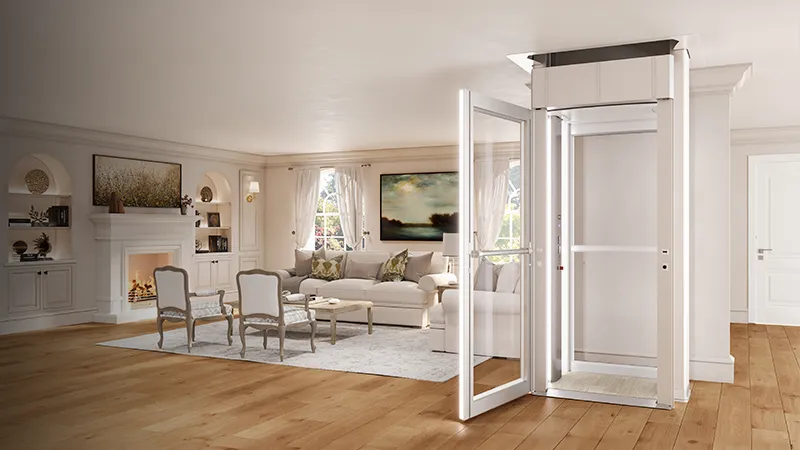
Savaria Luma through-floor lift with the door open in a living room.

The sections below explore different home lift options and the key considerations when choosing a through-floor lift or other home lift for your home.

  • Through-floor lifts provide comfortable and convenient access when travelling from one floor to another, without using the stairs. They are becoming popular among homeowners who want to improve accessibility, plan for future mobility needs or increase the value of their home.
  • Unlike stairlifts, through-floor lifts allow users to travel while standing, seated or, depending on the model, in a wheelchair.
What is the difference between a through-floor lift and shaftway home lift?

Through-floor lifts travel through a floor cut-out and service two floors of your home. Other home lifts that travel in a shaftway can accommodate more levels of your home. The Savaria Luma lift is a self-supporting through-floor lift, meaning that it can be placed almost anywhere in your home and without major changes to your property. The Savaria Vuelift features an integrated clear shaftway. It can travel up to six stops and also have good flexibility for placement in the home. The ultimate difference is how many levels in your home you need to service, how much space you have for a lift and whether you have budget constraints that will influence what you can select.

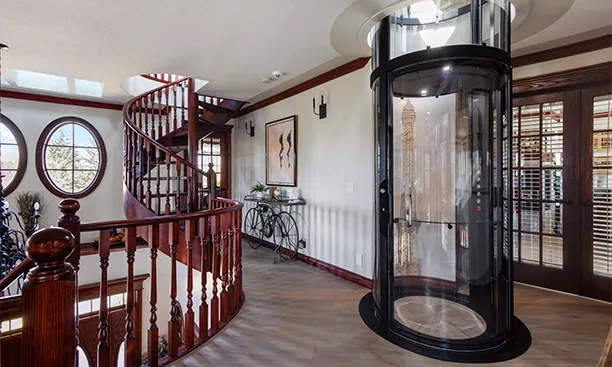
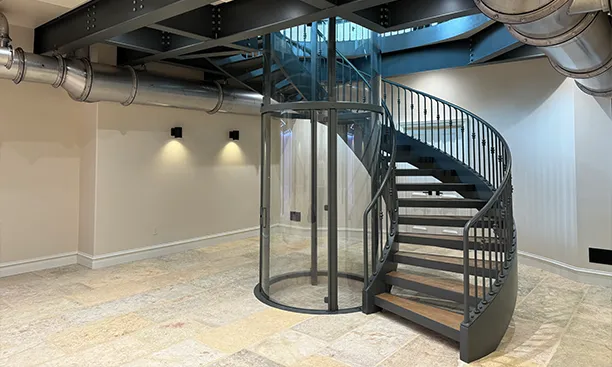
Savaria Vuelift Round panoramic home elevator beside a metal spiral staircase.
Feature Through-floor lift Shaftway home lift
Floors served Two floors Two or more floors
Building work required Minimal More extensive
Installation time Some models can be fitted within two days Several days or longer
Footprint Smaller, more compact Larger
Best suited to Existing homes and retrofits Long-term multi-floor access

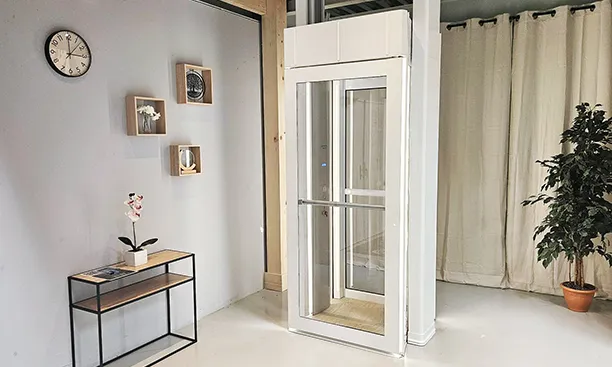
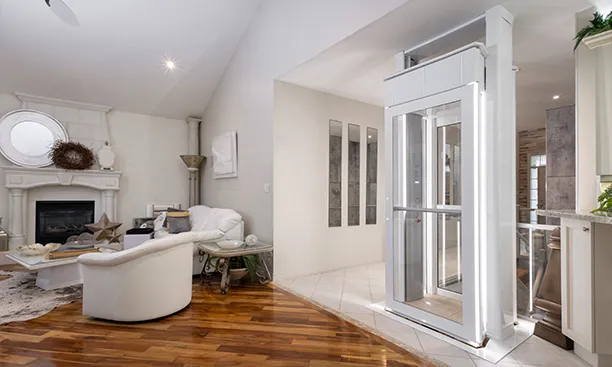
Savaria Luma through-floor lift with a white frame and acrylic door in an open-plan living room.
Where can a home lift be installed?

Through-floor lifts and home lifts can only be installed indoors, although it’s possible to have a door from a home lift opening to a garage or outside. They are often installed in hallways, spare rooms and living spaces, or as part of a home extension or renovation project. Thanks to its compact design, the Vuelift can often be installed in areas that might otherwise go unused, including within the centre of a spiral or wraparound staircase.

The best location will depend on the available space, structural requirements and how you use your home.


How much space is needed for a home lift?

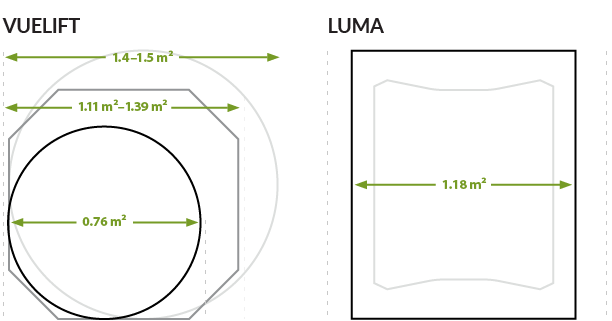
The amount of space required varies depending on the type of lift and the size of the cabin. A Savaria Vuelift Mini home lift only needs a 0.76 m² footprint and includes a glass or acrylic shaft. Its smaller size means it has the flexibility to fit inside a wraparound or spiral staircase.  A larger home lift like the Savaria Vuelift Octagonal requires between 1.4 and 1.5 m² of floorspace at each level.

If you want to add a lift to your existing home, it is important to understand whether you have the space available on each floor, or if you need to do some renovations in order to create that space.

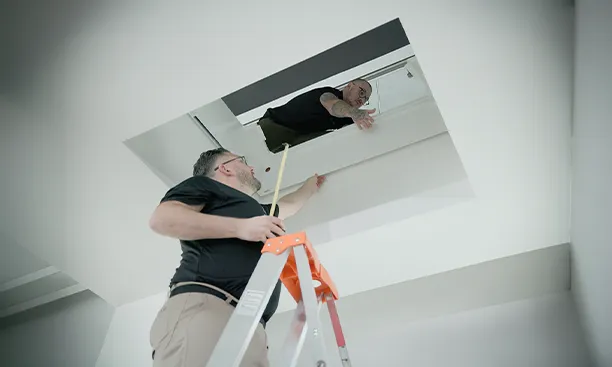
Through-floor lifts generally have a smaller footprint and can often be installed in existing homes with relatively little disruption. The Savaria Luma through-floor lift requires a floor cut-out of just 118 cm by 97 cm.

A survey can help determine the most suitable location and the amount of space required. Book a survey here.

Diagram comparing the footprint of the Savaria Vuelift and Savaria Luma, with measurements for round, octagonal and rectangular Vuelift configurations.

Two installers measuring a ceiling opening with a tape measure, one on a ladder and one on the floor above.
How much work is needed before a lift installation?

Through-floor lifts generally require a floor opening between levels, structural reinforcement around the opening and an electrical supply. Some properties may also require additional strengthening of the floor structure, moving heating pipes or additional electrical wiring.

Our Vuelift panoramic home elevators don’t require the construction of a lift shaft but a structural engineer typically needs to confirm the property can safely support the lift (and carry out necessary work if needed) and additional electrical work is usually required before the installation. The amount of preparation needed will vary depending on the property and the type of lift selected.

More detailed information can be found in the Luma and Vuelift planning guides.


How quickly can I get a through-floor lift or home elevator?

Lead times vary depending on the complexity of your project and any bespoke options selected but the general rule of thumb for home lifts installations is between 8-12 weeks.

Through-floor lifts are quicker to install than shaft-based home lifts, as they require less structural work.

Following your survey, we’ll provide an estimated timescale based on your property and the lift you’ve chosen. If you’re planning a renovation, extension or new build, arranging a survey with us early helps ensure your lift is built into the project and installed at the right stage.

Savaria Vuelift panoramic home elevator with a black frame beside a wooden staircase.

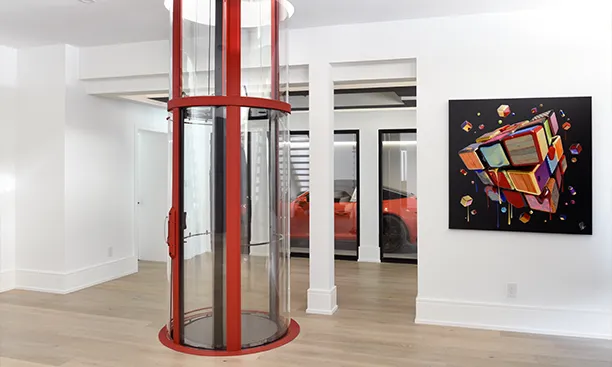
Savaria Vuelift panoramic home elevator with a red frame in a bright modern hallway.
Customising your home lift

For some people, a home lift is not just about easier access. Many homeowners want to personalise a luxury home lift with finishes that complement their décor and style. For example, a Savaria Vuelift is offered in a range of frame colours with custom paint options also available.

In addition to improving accessibility, installing a through-floor lift or home elevator can also add value to your property by making it more future-ready and may increase its appeal to some buyers, particularly in larger homes or multi-storey properties. However, any impact on property value will depend on factors such as location, property type and local market conditions.


Before you decide

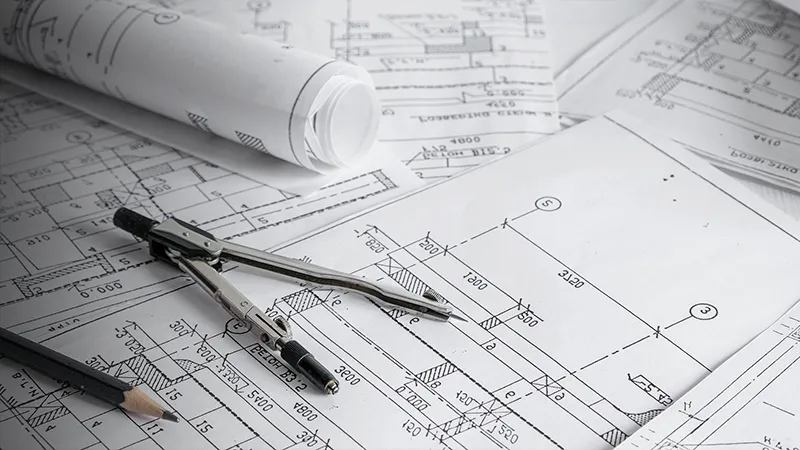
Architectural drawings with a compass and pencil.
  • Before choosing a home accessibility solution, it's important to understand the practical aspects of installation, ownership and ongoing maintenance. Factors such as planning requirements, selecting a qualified installer, responsibilities if you rent your home and routine servicing can all influence your decision and help ensure your lift remains safe, reliable and compliant for years to come.

Planning permission in the UK

In the UK, planning permission is typically required for larger building works or alterations that affect the external appearance of a property.

Most internal accessibility adaptations, such as stairlifts, through-floor lifts and many wheelchair lifts, do not usually require planning permission because they are installed within the existing property and involve only limited structural alterations.

However, planning permission may be required when installing some home lifts if:

  • The installation involves significant structural alterations
  • An external lift shaft or extension is being added to the property
  • Your home is a listed building
  • You live in a conservation area where additional restrictions may apply

Building Regulations approval may also be required where the installation involves structural work, electrical work or other building alterations that must comply with current safety standards.

If you are unsure whether planning permission or Building Regulations approval is required, it is always best to contact your local planning authority or speak with your lift provider, who can advise on the requirements for your property and proposed installation.

If you are renting

If you rent your home, you will need your landlord’s permission before installing a stairlift or any type of lift, even if planning permission is not required. This is because the installation is considered a modification to the property.

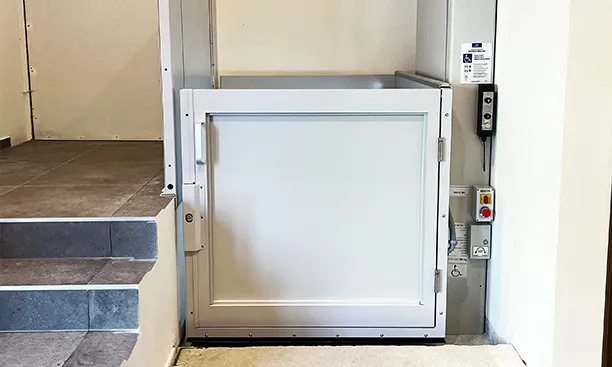
Savaria Luma through-floor lift with a white frame and closed acrylic door.

Choosing a qualified installer

Accessibility equipment should always be installed by a trained and authorised professional who is familiar with the specific product being fitted. Correct installation is essential to ensure the lift operates safely, reliably and in accordance with the manufacturer's requirements.

An incorrectly installed lift may not perform as intended and could lead to operational issues, unnecessary repairs or reduced product lifespan. In some cases, using an installer who is not trained or authorised to fit a particular product may also affect warranty cover and ongoing service support.

Savaria lifts should be installed by Savaria or an authorised Savaria partner who has received the appropriate product training and understands the installation requirements for that equipment.

Servicing and maintenance

Regular servicing and maintenance are important to help keep your lift operating safely and reliably, reduce the risk of unexpected breakdowns, and maximise its lifespan.

Most manufacturers recommend an annual service, although more frequent servicing may be appropriate depending on the type of lift, how often it is used, and the installation environment.

Outdoor lifts require particular attention because they are exposed to the elements. Although outdoor platform lifts and stairlifts are specifically designed to withstand changing weather conditions and are often supplied with protective covers, regular maintenance is essential to ensure reliable long-term performance.

Home lifts are designed to provide many years of use when properly maintained. With routine servicing and replacement of worn components when required, many lifts can remain in operation for 15 to 20 years or more.

You can read more on servicing, aftercare and support here.

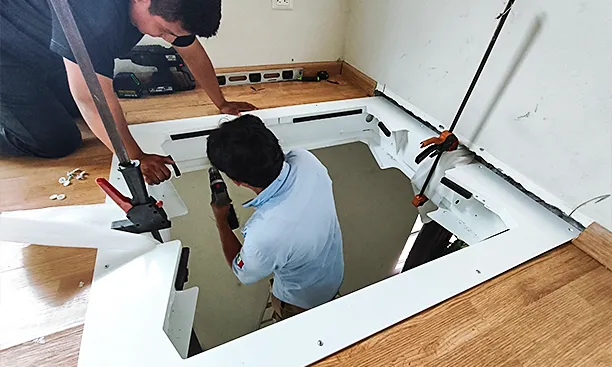
Installers cutting a rectangular opening in a wood floor for a through-floor lift.
Why do prices vary between suppliers?

When comparing quotes, remember that the lowest price isn't always the best value.

The overall cost reflects more than just the product itself. It may also include the home survey, installation, customisation, warranty, servicing and ongoing aftercare. A reputable supplier will recommend the most suitable solution for your needs and ensure it’s installed safely by trained engineers.

Before deciding, it's worth comparing:

  • The company's experience and reputation
  • Customer reviews and testimonials
  • Warranty and servicing options
  • What's included in the quotation
  • The level of after-sales support available

With Savaria, you can choose the route that suits you best. You can buy directly from us or, if you prefer, we can put you in touch with one of our trusted local partners for expert advice, installation and ongoing support.

Showroom featuring multiple accessibility products, including home elevator doors, vertical platform lifts, and demonstration stairways displayed in a clean, modern layout.

Let us connect you with your local Savaria expert today

Let's connect